Zgorzelec: what to see on the Polish side of Görlitz
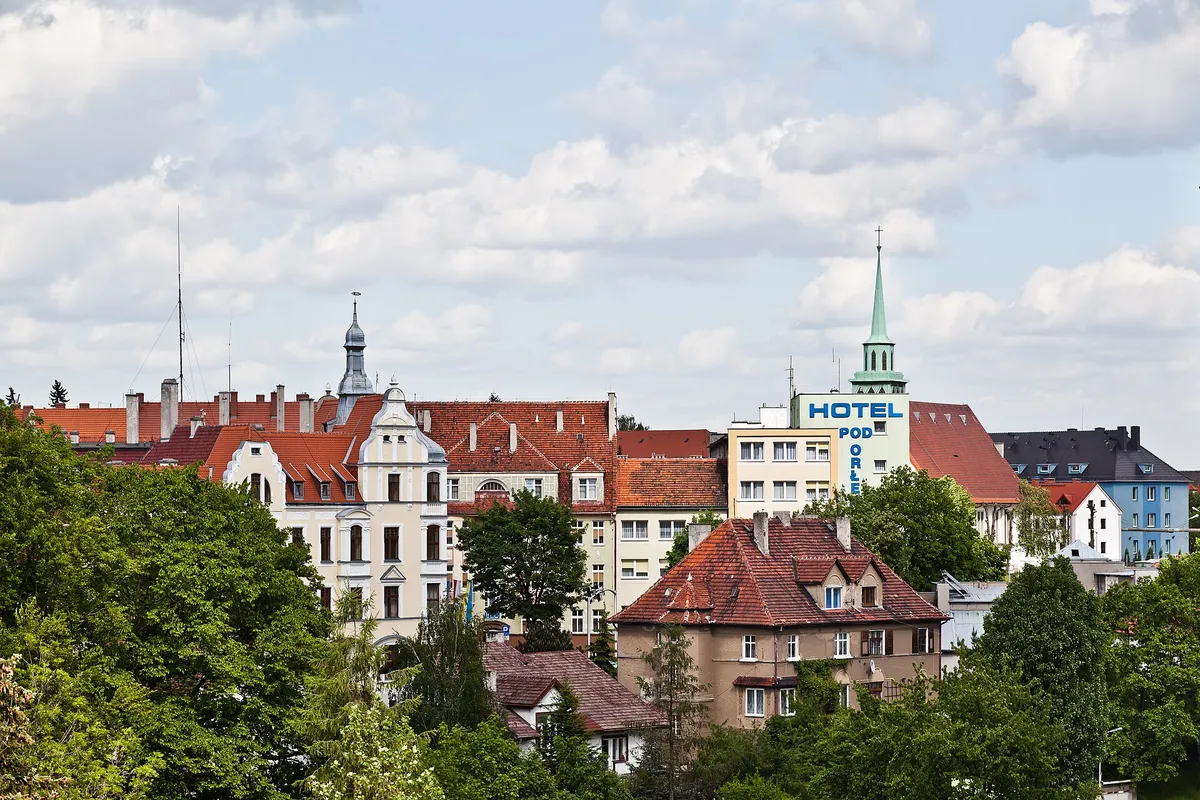
Zgorzelec did not exist as a separate town until 1945. It was the eastern part of Görlitz, on the other side of the Lusatian Neisse. Only after the war, when the border was drawn along the Oder and the Neisse, did this part go to Poland and get a new name. Today it is a small town where you can best see what is left of one organism cut by a border. Everything below can be covered on foot in one afternoon.
What is Zgorzelec, and what does it have to do with Görlitz?
Before the war it was the eastern district of German Görlitz. After 1945 the western bank stayed in Germany and the eastern one became Polish Zgorzelec. Today the two towns call themselves jointly Europastadt Görlitz/Zgorzelec and cooperate on culture, tourism and infrastructure. Many people cross the bridge to the other side in daily life.
Getting there
From Wrocław and Legnica you can reach Zgorzelec Miasto station on Koleje Dolnośląskie trains on the Węgliniec–Zgorzelec line (no. 278). From the station it is a few minutes on foot to the border. Check the timetable and prices before you travel.
The Neisse embankment and the view of the old town
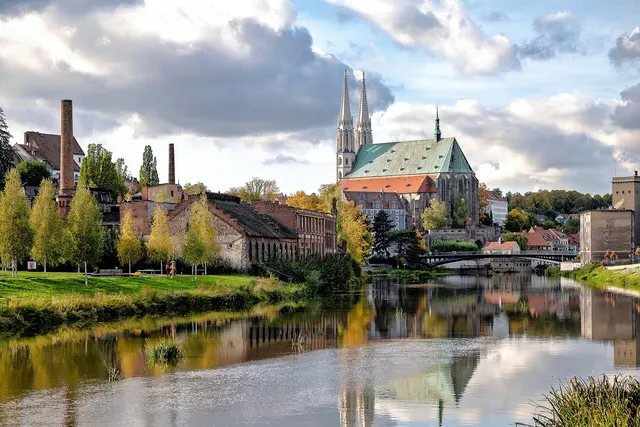
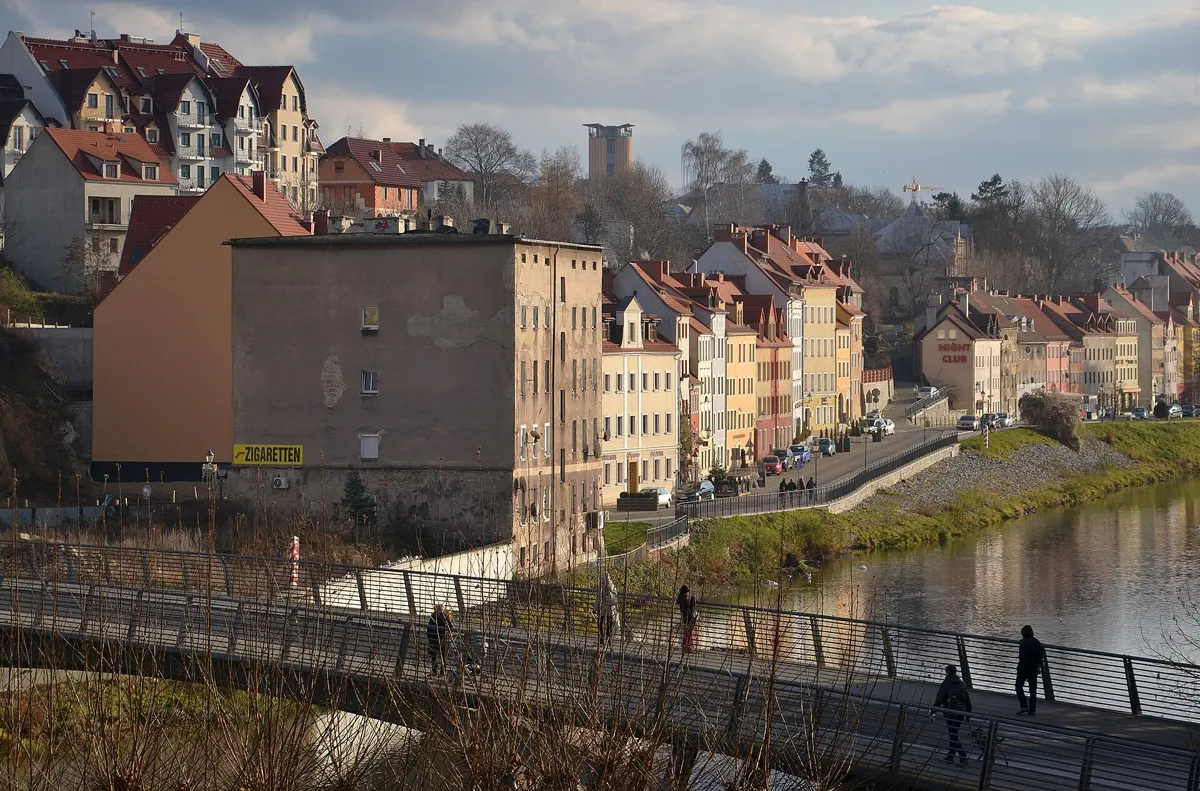
The best thing Zgorzelec offers a visitor is the view. From the Polish bank you look at the skyline of Görlitz, with the towers of the Church of St Peter and Paul and the roofs of the old town. Here the river stops being a line on the map and becomes a view in which two banks look at each other.
The Altstadtbrücke
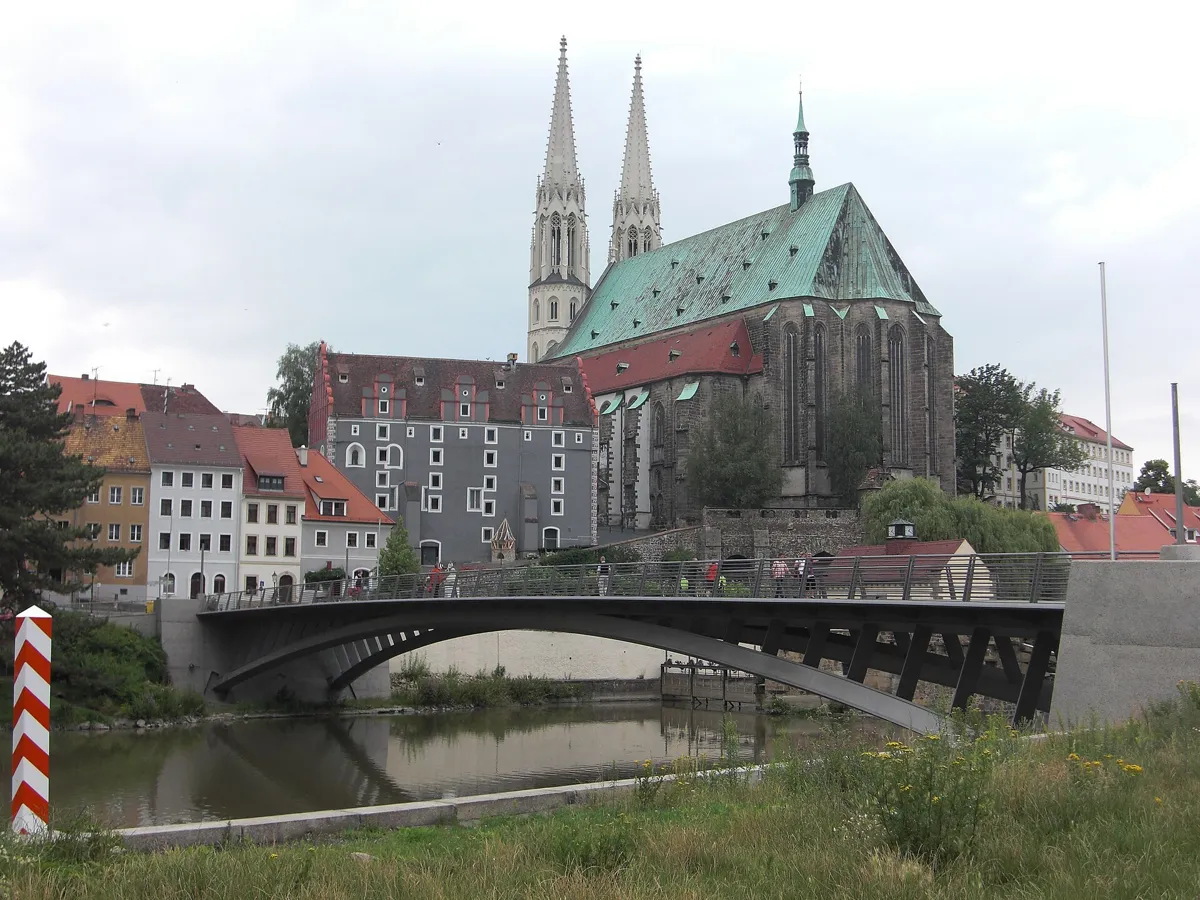
The bridge links the two banks. The historic bridge, like the other Neisse crossings, was blown up by the retreating German army on 7 May 1945. After the Potsdam Agreement the Oder–Neisse line became the Polish–German border. Today's bridge was built in 2003–2004 on the foundations of the one from 1945. Walking across it is the simplest way to feel how small the distance is.
Jakob Böhme: monument and house
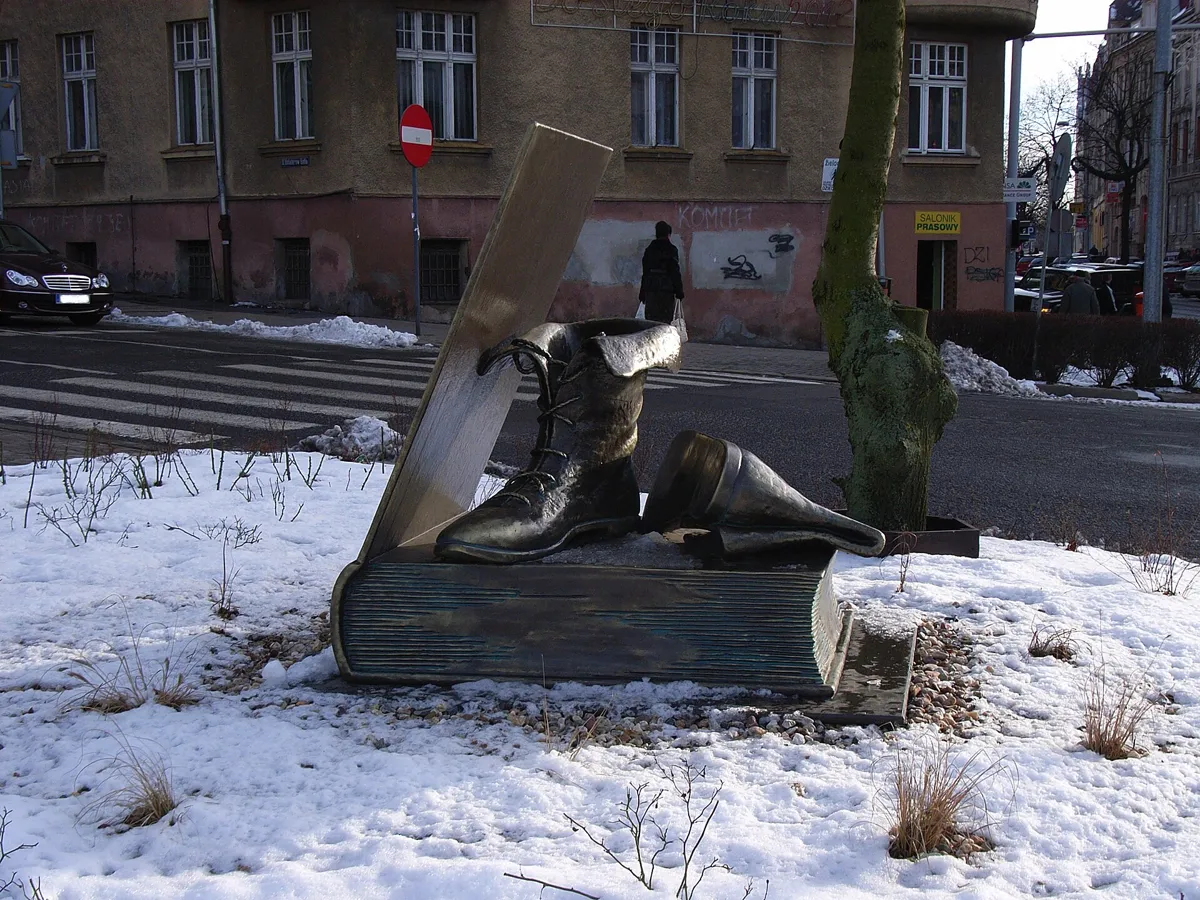
On the Polish side stands the monument to Jakob Böhme, a cobbler and mystic who sought the meaning of the world not in books but in the light of life. In Zgorzelec you can also see the Jakob Böhme House. It is a good place to end the walk: from here you can see the towers of Görlitz across the Neisse.
A plan for the afternoon
- Get off at Zgorzelec Miasto and walk towards the Neisse.
- Walk along the embankment and take in the view of the old town.
- See the monument and the house of Jakob Böhme.
- Cross the bridge to Görlitz and walk the old town along the route Görlitz in one day.
Also read about the history of the division: Görlitz and Zgorzelec: one city, two countries.